TO BLINK OR NOT TO BLINK: MEPs HAVE BEEN FACING THE ELEPHANT IN THE ROOM — THE CASE OF 28,000 SOFIA DOGS SUBJECTED TO FORCIBLE DISAPPEARANCE
Read complete dataset below or jump to Sofia Dog Massacre during Bloody Age, 2009-2016 >
THE MYTH. A quotation of 2022 statement is publicly available on the website of the Animal Welfare Intergroup in the European Parliament. “It is incredible to see the amazing results of a well designed, evidence based approach as it is the case of the population management in Sofia, Bulgaria where the number of stray dogs went from 11,124 in 2007 to 3,589 in 2018 through a strategic approach that combined mass-sterilisation, rabies vaccination and free neutering for pet animals,” Petras Auštrevičius, then Companion Animals Working Group Chair, said.
THE NUMBERS. 2006-2024 Sofia animal shelter Intake and Outcome data compilation is presented in the tables below. All reported numbers we found and gather so far are arranged here in a logical sequence. Since August 2024 until now, we are extensively working to provide more operational transparency in this field. Daily updates are coming once any relevant vestige appears. Useful referent sources will be presented here soon.
Large unreported Dog Dispositions, reported fake Releases. Alongside announcing the number of unreported shelter animal outcomes, this dataset is also aimed to juxtapose the counts of sterilised dogs available in public in Sofia as third-party surveys found, to the fake reports/claims of the officials on releases of sterilised strays in a relevant time period. Since the 2009 to 2016 discharges appear to be heavily misreported, these years are highlighted in bold. Years 2011 and 2013-2016 all feature unreported outcomes at a large, range 2,728-4,784. These numbers are highlighted. Years 2009, 2010 and 2012 feature reporting large, inconsistent release numbers, so the releases are in bold too. 2,524 releases in 2013, just before the planned stray population count, could almost ensure the availability of the actual sterilised stray subpopulation (2,530 dogs), indeed. Even taking into account a typical death toll of 20% per year, a supposed cohort of 3,000 strays released in 2009 would affect the figures found in the August 2013 survey.
N.B. Relinquishment numbers were first reported in 2017. Reported outcome categories were only three until 2016, including “Died and euthanised.” Since 2017, death cases were reported separately, in two relevant categories. The standard category “Dogs reunited with owner” was never even mentioned. Except 29 shelter dogs claimed by then director Miroslav Najdenov as remained in the facility at the end of a reported period (mid July 2007), the categories “In care 31st December” and “In care 1st January” are also not mentioned at all.
| Catches reported | Adoptions reported | Euthanasia & died reprtd | Releases reported | Rest in care at the end of the period | |
| Sep 2006 : Mid Jul 2007 | 3,852 | 329 | 852 | 2,642 | 29 |
Other sterilised dogs available in public June-July 2007? Yes.
Survey July 2007, neutered stray dogs in public:…………….. 4,968
| Catch reprtd /+Av. in care | Adoptions reported | Euthanasia & died reprtd | Releases reported | Dispositions unreported | |
| Mid Jul – Dec 2007 * | 2,399 /+29 | 61 | 198 | 2,100 | 69 |
| 2008 | 4,968 | 206 | 579 | 4,162 | 21 |
| 2009 | 5,141 | 451 | 1,540 | ~3,000 | ~150 |
| 2010 | 4,588 | 886 | 1,020 | 2,773 ** | -91 |
| 2011 | 5,872 | 482 | 606 | n.a. | 4,784 |
| 2012 | 4,798 | 433 | 91 (Jan-Mar) | 3,748 | 526 |
| 2013 | 5,861 | 609 | n.a. | 2,524 (Jan-Jul) | 2,728 |
| Subtotals | 33,656 | 3,128 | 4,034 | 18,307 | 8,187 |
Survey Sept.-Oct. 2013, neutered stray dogs in public:……… 2,530
2012, dogs died, removed from public: 534 (sterilised only) ***
Survey 2009, entire & sterilised available: 8,538; of them sterilised n.a.
Survey Feb. 2011: entire & ster. available: 9,242; of them sterilised n.a.
| Catches reported | Adoptions reported | Euthanasia & died reported | Releases reported | Dispositions unreported | |
| 2014 | 4,272 | 483 | n.a. | n.a. | 3,789 |
| 2015 | 4,032 | 638 | n.a. | 129 (May) 125 (July) | 3,140 |
| 2016 | 4,109 | 895 | n.a. | n.a. | 3,214 |
| Subtotals | 12,413 | 2,016 | n.a. | 254 | 10,143 |
Survey July-August 2015, neutered stray dogs in public:……………. 2,302
| Catches reported /Аv. in care n.a. | Relinqsh reported | Adoptns reported | Euthanas reported | Died reported | Releases reported | Disposit. unreport. | |
| 2017 | 3,648 | +92 | 693 | 506 | 37 | 2,469 | 35 |
| Jan-Mar 2018 | 938 | +30 | 142 | 92 | 2 | 670 | 62 |
| Subtotals | 4,586 | 122 | 835 | 598 | 39 | 3,139 | 97 |
Survey March-April 2018, neutered stray dogs in public:……………. 2,404
| Catches reported /Аv. in care n.a. | Relinqsh reported | Adoptns reported | Euthanas reported | Died reported | Releases reported | Under-reported (over-reported) | |
| Apr-Dec 2018 | 2,775 | +49 | 458 | 308 | 60 | 1,944 | 54 |
| 2019 | 3,473 | +63 | 945 | 399 | 50 | 1,964 | 178 |
| 2020 | 3,450 | +130 | 1,321 | 548 | 35 | 1,499 | 177 |
| 2021 | 3,554 | +138 | 1,437 | 539 | 28 | 1,485 | 203 |
| 2022 | 2,334 | +25 | 760 | 341 | 18 | 1,337 | (-97) |
| 2023 | 2,179 | +59 | 644 | 405 | 3 | 1,195 | (-9) |
| Jan-Aug 2024 | 1,043 | +7 | 352 | 168 | 16 | 572 | (-58) |
| Subtotals | 18,808 | +471 | 5,917 | 2,708 | 210 | 9,996 | 612 (-164) |
The intention to provide a comprehensive and reliable dataset on Sofia ACS and shelter operations urged us to manage data from several official sources that are still publicly available. The numbers for a given year could appear to be too varying, indeed, in hundreds. For example, in an early 2012 written response to councillor’s questions, mayor Fandakova reported 4,588 shelter intakes, 886 adoptions and 1,020 deaths in care and euthanasia in 2010. The company’s website during the era of Petar Kirov & Veselin Asenov (Sep 2015 – Jan 2024), however, presents intakes and adoptions only, 5,308 and 377, respectively. Neither died and euthanised dogs, nor releases of sterilised dogs in the years from 2008 to 2016 are reported in this official source in any way.
Terms: “available” — no. sterilised dogs already available in public according to a survey; “releases” / “sum releases”– no. releases of sterilised dogs in one year or in several years as reported by Ecoravnovesie; “accumulated” — the sum of dogs available in the beginning of the period under review, and reported releases in the same period; “missing” — difference between accumulated numbers and strays available according to the survey at the end of the period under review; “Died in public” — carcasses of sterilised dogs collected; “Estimation, July 2024” — count of neutered stray dogs is likely the same as in 2013, 2015 and 2018.
*** Count of sterilised stray dogs died in public should be estimated at 38% of all 1,400 died strays removed in 2012, as such percent of sterilised was found in the 2013 survey.
———————————————————————————————————-
Biljana, early 2000s: “The policies are an excess of dogs to exist here,” she was summarising repeatedly in a couple of private conversations. Biljana (forgotten surename) was a known TV woman that likely had a whole lot of acquaintances and knowledge.
Actualno.com, 23th Jan 2013: “Other animals such as dogs, rats, or guinea pigs are also used [in the military medical research facility in Bulgaria], especially in testing chemical weapons,” then Military-Medical Academy chief, Gen. Stojan Tonev told media.
Unlike many cities around the World, for instance New York City or the City of Los Angeles, where both “Animal Control Service” and “Animal Care Centers” are apart, mafia-style dog population managemen in Sofia is based for decades on a single criminal enterprise, now officially named “Municipal Enterprise Ecoravnovesie.”
Infamous Ecoravnovesie was designed to be omnipotent. It runs all four municipal holding facilities with a total capacity of near 2,100 dogs. The nominal business there encomprises sterilisation of both unowned and owned dogs; rehoming; cure and/or euthanasia of sick animals, etc. However, this entity had also taken all field activity – from collecting roaming dogs and removing carcasses of various species to releasing sterilised strays and reporting catches and releases.
Instead the ACOs appointed by the City Council as World’s best practice, in Sofia there is a varying number of “dog catchers teams” that are directly subordinated to the Ecoravnovesie manager, i.e. the general manager of the four facilities. As catchers are involved in releasing sterilised unwanted dogs, the general manager executes decisions above on when, where and what number of strays to be released and when and how to report any numbers affected.
During past decades, changes of an executive with another one followed any emerging scandal. This seemed to aim at one thing – to cover up the record keeping back in the time, say crimes committed by the gang back in the time.
In 2016, when asking more comprehensive data on past shelter operations (2011-2015 or so), I faced the true clique that plagues Sofia dog population management.
In a phone call, then Ecoravnovesie director politely rejected any dataset to be provided via email, but advised me to make a written data provision request. The written request resulted in an office invitation via phone call. There I met the director and Veselin Asenov, his fellow and successor in next years. Shortly after, in a phone call, then director stated there are too much data and all this could not be processed and summarized.
Surprisingly, an unexpected written rejection came from the then deputy-mayor, Maria Boyadzhiiska, and was formally based on some non-essential sender info.
On 13th July 2016, another attempt was addressed via municipality online system to then mayor Yordanka Fandakova, a notable European People’s Party fellow, but he also did not answer. Several phone calls to her office resulted only with an astonishment of the missing answer expressed by her secretary. Few months later, some weird moves to mitigate the likelihood of any possible scandal were made. Maria Boyadzhiiska was fired after serving as a deputy for 11-years since the beginning of Boiko Borisov mayoralty. And Veselin Asenov took the Ecoravnovesie director’s office for seven years.
———————————————————————————————————-
In November 2023, mainstream media in Bulgaria released reports on extremely cruel treatment of dogs impounded in three out of four Sofia municipal animal shelters (see pictures below). This occured just days after the dominating party GERB lost mayoral elections in Sofia in November 2023. Following that, an acting director of the local animal control agency, Municipal Enterprise Ecoravnovesie, was appointed on 8th February 2024. Then new management launched a new company website as the old one with publications made until December 2023 werre accessible earlt September 2024.
Far more anxious news on thousands of missing dogs taken by the local animal control services were released in 2018. Any institutional reaction on this was not heard in the next six years.
In 2006, neutering strays at a large scale was proclaimed by then mayor Boyko Borisov and futher PM as an effective approach in managing dog population. Within the next decade, mayors and animal control directors sticked to reporting only incomplete and arbitrary data on shelter intakes and outcomes. Tens of thousands of dogs became victims of enforced disappearance, with no account and explanation on the ways of their disposition.
Here is the dataset divided in three time periods. Each of them is clearly characterised by the categories used in reporting shelter outcomes and features a certain number, too large to worry animal welfare community. Hence these numbers might be named “The Big Three.” Numbers with no parentheses are either numbers reported by officials, or sums accumulated by relevant numbers reported by them at a yearly or monthly basis. Numbers in parentheses are estimations based on the relevant types of discharge reported.
* As the standard reporting categories “Died in care” and “Euthanised” are totally absent in the 2012-2016 reporting data, the total of unreported outcomes includes an unknown number of both categories. “Mortality rate in the shelters and veterinary clinic dropped more than 50% in January [2017] as died dogs are 54,” as was announced on the old company website. From this, it might be realistic to suppose some 110 deaths as an average per month during the five-year period under consideration, or roughly a total of 6,600 deaths. All this comes alongside unreported euthanasia numbers.
———————————————————————————————————-
In mid 2007, in a study on stray dogs population presented by Konstantin Dimitrov et al. there were reported 4,968 neutered dogs on hand.
In the next 42 months to the end of 2010, a total of another 12,180 neutered dogs were reportedly released in public.
For 2011, all data provided by Ecoravnovesie encomprised only 5,872 dogs removed, of which 482 adopted.
All 2012 was not even mentioned in any way. In the Spring started a massive stray dog removal after two deadly accidents with elderly men occured.
2013: 5,861 animals removed, as 609 of them were reportedly adopted.
In October 2013, new survey on local stray population found 2,530 neutered dogs available outside. N.B. It should highlight the fortified stray dog removal and steep drop in this subpopulation since 2009 after its supposed increase between 2006 and 2008.
2014-2015: a total of 9,425 removed dogs accumulated, of which 1,121 adoptions were stated.
In August 2015, a third survey counted 2,302 neutered strays remaining in public.
For 2016, only massive removal was reported — 5,004 dogs, including 895 eventually adopted.
Since January 2017, releases were reportedly resumed and reported on a monthly basis. In the next 15 months, a total of 3,139 releases was announced.
In March 2018 (also dated 2017), the last report on stray population stated 2,404 neutered strays to be alive.
From April 2018 to July 2024, dog removal was nominally balanced by similar release numbers with a total of 9,682 releases. Still no further data on stray population number.
BTV News, 1st Jan 2018: “Dogs “disappear” in the municipal shelters run by “Ecoravnovesie.” The fate of 5,000 stray dogs from Sofia in recent years is unclear – there are also no estimates of how much the taxpayers pay per a stray dog. Bad accountability in the municipal enterprise that spends millions every year.”
BTV News, 2nd Jan 2018: “Where does the money for the homeless dogs in Sofia go? Sofia municipal shelter in Gorni Bogrov did not report dog deaths in the last 4 years. After our inquiry, we receive the number for 2017 – 518. However, the municipal councilor Marta Georgieva asked “Ecoravnovesie” also to provide the records on animal microchips. This information was denied. After this material was broadcast yesterday, today the municipality [representatives] refused an interview and our team to access to the municipal shelter.”
BTV News, 17th Aug 2018: “Over the last 11 years, the number of stray dogs in Sofia has decreased 4 times, the municipality reported. But how is this achieved? In five years, however, there is no reported number of dogs died in the Ecoravnovesie shelters. The company did not know where the animals had gone. The controlling body – Bulgarian Food Safety Agency – had also not noticed their absence. And it is still unclear how many animals died between 2012 and 2016. The municipal enterprise swallows 2.5 million Leva budget per year. The microchip number of a discharged dog shall be recorded. We asked to see the list. This information was denied. Meanwhile, the municipality considers the need to build two more new shelters – for horses and cats.”
———————————————————————————————————
BNT News, 23th Nov 2023: “Unclean cages, fighting for food and fighting between dogs. Some of the injured animals die from their wounds, and others have not left the buildings in which they live for years. This is the situation in the [Sofia municipal] shelter in the village of Gorni Bogrov. Nearly 1,500 dogs live behind fences – [some] in cramped outdoor cages, regardless of weather conditions.”
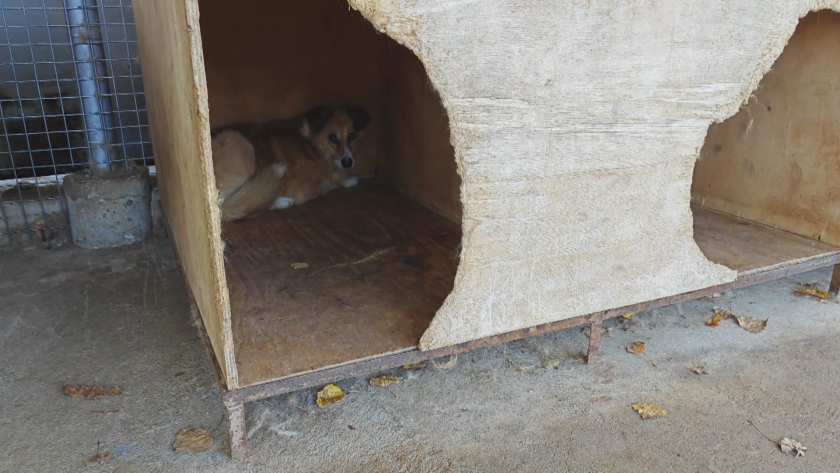
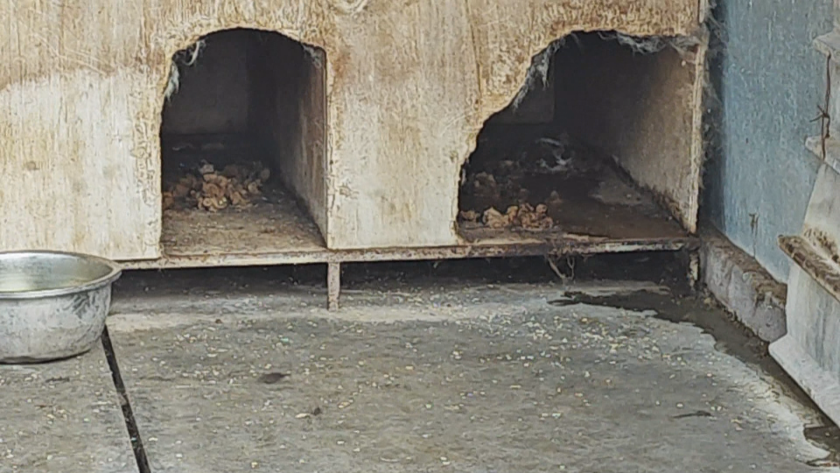
The shelter in Gorni Bogrov. Photo: BNT.
BTV News, 29th Nov 2023: “In dirt and unclean cells, without water, light and enough space. Over 200 dogs live [in only 30 cells] in appalling conditions at the shelter in the Sofia District Vrabnitsa.”
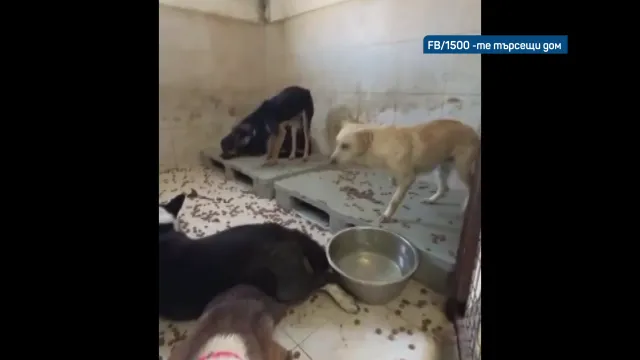


The clinic/shelter in Vrabnitsa. Photo: BTV.
———————————————————————————————————-
From the 1990s to the present, arbitrary pet breeding across Bulgaria is the very reason of existing a permanent dog and cat overpopulation, mass animal neglect and cruelty. Municipality of Sofia indeed did not establish a comprehensive programme to sustainably curb the local dog population dynamics, especially by addressing owned animals as the major subpopulation and major source of vital but surplus dogs. Instead, the local dog population management, aka DPM, was approached by introducing various weird practices to predominantly manage strays. The local animal control services’ budget increased from some 500,000 Leva until 2005 to 4.5 million Leva in 2024. Euthanasia was nominally quitted in 2006 in the capital city and in 2008 in the entire country. Meanwhile, tens of thousands of dogs became victims of a mafia-style animal control enforced in Sofia. This is always complemented by unaccounted deaths in the field e.g. strays hit by a vehicle or shot to dead or poisoned by locals.
Louisa Tasker. Stray Animal Control Practices (Europe), 2007, WSPA, RSPCA. Methods of stray dog control. “One country exclusively practiced catch, neuter, release of dogs (Greece). This approach was reported to be problematic because it appeared to result in owners “dumping” their dogs in areas “where they knew they would be looked after.” A further five countries (17%) (Bulgaria, Malta, Italy, Serbia and Spain) operated catch, neuter, release in a limited number of locations, although the reasons for this were unclear, as were the problems encountered when adopting this approach.”
Katherine Watt, Vagabond, 1 Feb 2008: “Killers on the Road. Emil Kuzmanov, founder of the Animal Programs Foundation of Bulgaria, or APF, notes: “The stray overpopulation is not a separate problem. It is a result of unrestricted and irresponsible ownership, breeding and abandonment.” Emil campaigns for changes that would substantially reduce the number of homeless, hungry and therefore potentially harmful dogs. “First, there should be registration of owned dogs, legal sheltering of unwanted dogs and penalties for the abandonment of animals. The Bulgarian government needs to be tougher on unlicensed breeders – for example, the half a million fertile bitch owners – as well as in its pursuit of unlicensed dog catchers and traffickers. It should also focus on education and cheaper neutering for pet owners in order to restrict mass home breeding.”
FAO, World Animal Protection, IZSAM, Mar 2011: “Dog Population Management. Case study: Example of DPM failure due to limited prior assessment and planning. In Sofia, Bulgaria, following much pressure from local animal protection societies, the authorities ceased using a ‘catch and kill’ strategy [ca.2006] and adopted a catch, neuter and release (CNR) approach. This approach was adopted without any public or other stakeholder consultation. There was no strategy behind this CNR programme. [Locals] did not want stray dogs in their community and did not understand the rationale behind CNR. This programme has resulted in many residents using their own measures to control stray dog numbers by poisoning the dogs after their return.”
———————————————————————————————————-
Following two deadly accidents in 2012, the Municipality focused its DPM on a fortified stray and free-roaming dog collection and forced disappearance. The number of dog catching teams had increased to some seven. The local animal control shelter capacity increased from 200 to some 2,000 dogs plus a rescue with additional 200 dogs. The bad deed, however, is the record-keeping to be missed out. In several years until 2015, local animal control agency, Municipal Enterprise Ecoravnovesie, had published on its website data on dogs entering the system. While roughly 5,000 dog intakes per year were reported, outcomes became extremely opaque. For example, the number of dogs lost, rescued and reunited with they owners had been never revealed or mentioned. The only tipe of discharge then reported was “Adopted,” approximately 600 to 800 of all dogs taken as I recall. Now even intake numbers are removed from their website. So, after being picked up on a municipal truck, the Man’s Best Friend would most probably be either left confined to death in some of the three overcrowded facilities; or transferred in an untraceable manner to unknown parties. All that are clear enough characteristics of an ongoing institutional abuse of animals.
———————————————————————————————————
In September 2022, local authority marked some controversial advantage at an international level. A joint statement on the dog population management in Sofia was made together with Four Paws Foundation. It was issued as a digital leaflet (“Case Study”) by the Intergroup on the Welfare and Conservation of Animals (European Parliament). A static number of 3,589 street dogs available at a certain moment is highlighted in the document. Most important statistics on “In” and “Out” numbers during an extended 16-year period are not even mentioned. So a notion of population dynamics is absent here. The fake interpretation of meager data is clearly pursuing to just boast of a “successful project.” N.B. The period under consideration starts in 2006 when the street dog population was quoted to be “more than 20,000;” the count data are for 2007 and 2017, respectively; and issuing the statement was delayed to late 2022. Probably, there might be a reasonable dissent from Four Paws. The joint statement, indeed, was eventually issued just a couple of weeks before municipality to cede them an already cessed holding facility for another 10 years, for free. The previous cession of 10 years was due to expire then. Otherwise, a 20-year rent of similar property would cost some 100,000 Euro.
Dnes.bg, 14th Sep 2006: “By the end of 2006, the number of stray dogs in Sofia will reach about 27,000. At the beginning of the year, there were about 17,000 strays, according to a report presented to mayor Boyko Borisov. The document was written by the “Ecoravnovesie Municipal Enterprise” director, Dr. Miroslav Naydenov, and was provided to journalists at today’s City Council meeting.”
Animal People News, July/August 2007: “Sofia Street Dog Population is Also Down by Half. Sofia – A 10-month municipal sterilization drive has cut the street dog population of Sofia, the Bulgarian capital city, from more than 20,000 [in 2006] to just over 11,000, mayor Boyko Borissov and Bulgarian Academy of Sciences chair Ivan Yuhnovski told the Focus news agency on July 12, 2007. The Sofia municipal company Ekoravnovesie sterilized 3,862 dogs and euthanized 852 due to illness, injury, or dangerous temperament, said company director Miroslav Naidenov.”
———————————————————————————————————
Since 2019, deep state is likely aiming to erase practically all data relevant to dog shelter activity, so to keep the collective consciousness out of issue with the fate of tens of thousand dogs removed during last decade and earlier. Pound seizure, supplying laboratory animals by dealers and the use of companion animals in a range of research industries, that are practices widely discussed in the Western World, are completely unknown concepts for Bulgarian public. Unrestricted opportunities to traffic healthy animals in a systematic way and at a large scale is even not mentioned by the nominal animal advocates that serve in favor of power rather than of progress in the welfare of animals. From the late 2023, the news industry became exclusively focused on the miserable conditions of the dogs imprisoned in municipal facilities. Mainstream media are also flooded by pres releases on renovation of the facilities, animal control budget, management and relevant personal changes, “119 dogs entered, 99 neutered and 75 adopted last month,” etc.
___________________________________________________________
Website since 2004, run by Animal Programmes Foundation Bulgaria / Bulgarian Animal Programmes Foundation.
Contact Emil D. Kuzmanov, founder, at реt*аnimalрrоgrаms*оrg. Please use all manual typing instead copy-paste.
 Animal Programmes Bulgaria